Sadashiva Brahmendra — The Silent Yogi Who Sang of Brahman
An Advaita yogi who let his songs do the teaching — read through three of his compositions, from the wandering mind to the recognition that all this is Brahman.
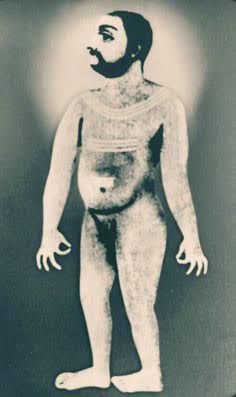
There are composers whose music leads us towards devotion. There are philosophers whose words lead us towards inquiry. And occasionally, there appears someone in whom music, devotion, philosophy and realization seem to meet.
Sadashiva Brahmendra was one such figure.
Remembered as an Advaita Vedanta philosopher, yogi, Sanskrit scholar and composer, Sadashiva Brahmendra lived in South India, probably around the seventeenth and eighteenth centuries. Much of his life has come down to us through spiritual tradition rather than conventional historical biography, and over time numerous extraordinary stories have gathered around him.
But we do not need the miracles to understand why he continues to be remembered.
His own compositions tell us what occupied his mind. Again and again, they return to one idea: Brahman — the one Reality underlying everything.
From Scholar to Yogi
Tradition remembers Sadashiva Brahmendra as a disciple of the Advaita teacher Paramasivendra Saraswati. He was deeply learned in Vedanta and wrote philosophical works including Atma Vidya Vilasa, Brahma Sutra Vritti and other texts dealing with Self-knowledge and liberation.
Yet the figure remembered by later generations is not merely that of a scholar. He became an avadhuta — an ascetic so detached from ordinary identification with body, possessions and social conventions that he wandered freely, absorbed in contemplation. He is also remembered as having taken a vow of silence, a mauna so complete that his teaching survives almost entirely through his writing and his songs rather than his speech — which is perhaps why he is remembered as the silent yogi.
Stories describe him walking without concern for clothing, status, praise or insult. Other traditions tell of extraordinary yogic events surrounding him. Whether every such story is read literally or devotionally, they all attempt to convey the same image: here was a man for whom the ordinary boundaries of “I” and “mine” had lost their importance.
His final resting place is traditionally associated with Nerur in Tamil Nadu, where his adhisthanam continues to be revered.
But perhaps the easiest way to approach Sadashiva Brahmendra is not through the legends surrounding him. It is through his songs.
Among his compositions, three in particular seem almost to form a spiritual journey.
1. Mānasa Sañcarare
“O mind, dwell in Brahman.”
Brahmaṇi mānasa sañcarare
Śrī ramaṇī-kuca-durga-vihāre
Sevaka-jana-mandira-mandāre
Mada-śikhi-piñchālaṅkṛta-cikure
Mahanīya-kapola-vijita-mukure
Paramahaṃsa-mukha-candra-cakore
Paripūrita-muralī-rava-dhāre
The composition begins with an instruction addressed not to another person, but to one’s own mind: “O mind, move in Brahman. Dwell in Brahman.”
The choice of the word sañcara is beautiful. The mind naturally wanders. Sadashiva Brahmendra does not merely condemn this wandering; he gives it another destination. If the mind must wander, let it wander in Brahman.
Then something interesting happens. The abstract Brahman begins to acquire the beautiful form of Krishna. We see the peacock feather decorating his hair. We encounter his beautiful face. We hear the flowing music of his flute.
The philosopher of non-duality has suddenly become a poet of Krishna.
But perhaps there is no contradiction. For the Advaitin, the beautiful form upon which the mind meditates and the ultimate Reality towards which meditation leads need not be two competing truths. The form gives the restless mind something to love. Love gives the mind concentration. And the concentrated mind is directed towards Brahman.
Thus the very first words remain the key to the whole composition: Brahmaṇi mānasa sañcarare. O mind, dwell in Brahman.
2. Pibare Rāma Rasam
“O tongue, drink the nectar of Rama.”
Rasane pibare Rāma-rasam
Dūrīkṛta-pātaka-saṃsargaṃ
Pūrita-nānāvidha-phala-vargam
Janana-maraṇa-bhaya-śoka-vidūraṃ
Sakala-śāstra-nigamāgama-sāram
Paripālita-sarasija-garbhāṇḍaṃ
Parama-pavitrīkṛta-pāṣāṇḍam
Śuddha-paramahaṃsāśrama-gītaṃ
Śuka-Śaunaka-Kauśika-mukha-pītam
If Mānasa Sañcarare addresses the mind, Pibare Rāma Rasam addresses the tongue.
The opening is wonderfully direct: Pibare — Drink! Rāma-rasam — the nectar, essence or sweetness of Rama. Rasane — O tongue!
Sadashiva Brahmendra does not merely tell us to speak the name of Rama. He asks us to taste it. The name is imagined as rasa — essence, flavour, nectar, something that must be experienced rather than merely intellectually understood.
He says that this Rama-rasa takes one away from sin, fear and sorrow; that it transcends the fear surrounding birth and death; and that it contains the essence of the śāstras, nigamas and āgamas — the sacred teachings. The final verse evokes great sages such as Śuka, Śaunaka and Kauśika as having drunk this same nectar.
There is a beautiful progression here. In Mānasa Sañcarare, the instruction was: Mind — dwell in Brahman. Here it becomes: Tongue — drink Rama.
Spirituality is no longer merely an idea to be understood. It becomes something to be tasted.
3. Sarvam Brahmamayam
“Everything is Brahman.”
And then comes perhaps the most uncompromising statement of all.
Sarvaṃ Brahmamayam
Kiṃ vacanīyaṃ kim-avacanīyam
Kiṃ racanīyaṃ kim-aracanīyam
Kiṃ paṭhanīyaṃ kim-apaṭhanīyam
Kiṃ bhajanīyaṃ kim-abhajanīyam
Kiṃ boddhavyaṃ kim-aboddhavyam
Kiṃ bhoktavyaṃ kim-abhoktavyam
Sarvatra sadā haṃsa-dhyānaṃ
Kartavyaṃ bho mukti-nidānam
Sarvam Brahmamayam. Everything is pervaded by Brahman. Everything is Brahman.
The verses then ask a succession of striking questions:
What is there to be spoken, and what is not to be spoken? What is there to be composed, and what is not to be composed? What is there to be studied, and what is not to be studied? What is there to be worshipped, and what is not to be worshipped? What is there to be known, and what is not to be known? What is there to be experienced, and what is not to be experienced?
If everything is Brahman, the divisions through which we normally understand existence begin to lose their absoluteness. Sacred and ordinary. Worshipper and worshipped. Knower and known. Self and other. Behind all these distinctions is the same Reality.
And so the composition finally turns toward constant contemplation of that Reality as the way to liberation.
From the Mind, to Rama, to Everything
Read together, these three compositions reveal something beautiful about Sadashiva Brahmendra.
In Mānasa Sañcarare, he tells the wandering mind: Dwell in Brahman. In Pibare Rāma Rasam, he tells the tongue: Drink the nectar of Rama. And in Sarvam Brahmamayam, the distinction between the spiritual and the ordinary finally disappears: Everything is Brahman.
There is devotion here, but it leads towards knowledge. There is Krishna. There is Rama. There is meditation. And behind all of them stands the Advaitic insight that occupied Sadashiva Brahmendra: the ultimate Reality is one.
Perhaps that is why these compositions remain so powerful centuries later. They do not require us to begin with complicated philosophy. One song asks us to watch where the mind wanders. Another asks us to experience the sweetness of the Divine Name. And the third asks us to look at the entire world again and recognize:
Sarvam Brahmamayam. All this is Brahman.